
Ora Protocol
The verifiable AI oracle stopped answering in September 2025 and the team repointed the Ora name at an AI trading-fund product that does not use the token. The contract is immutable and admin-free. Nothing else is running.
The oracle stopped serving in September 2025, leaving five requests unanswered, and the team repointed the Ora name at an AI trading-fund product that does not use the token. The standards work and the immutable contract survive. The protocol does not.
- + The token contract has no mint path, no admin and no proxy, so supply can only ever fall
- + Three Ethereum standards authored into the public record: ERC-7641, ERC-7007 and ERC-6150
- + opML and the Salus staking audit remain published under an MIT licence in the project's GitHub org
- − The oracle took its last request on 26 September 2025 and left five requests unanswered
- − The documentation site was deleted, taking the tokenomics and node guide with it, and the pivot was never announced
- − About half of supply has no published allocation, and the December 2025 release arrived with no schedule
The engineering was real and the standards contributions are permanent, but the protocol this score was written about has stopped. OAO took its last inference request in September 2025 and left it unanswered, the documentation site has been deleted, and the team has repointed the ORA name at an unrelated AI trading-fund product that does not use the token. What still scores is the token contract itself, which is immutable and admin-free, and the open-source record.
Everything that depended on the network running does not.
Infrastructure decentralisation3/20 Out of date
The inference network is not answering. On Ethereum, the canonical OAO deployment (0x0A0f4321214BB6C7811dD8a71cF587bdaF03f0A0, a proxy last upgraded 2025-01-23), the lifetime request counter reached requestId 4615 on 2025-09-26 and no request has arrived since. Requests 4611-4615 (11 Aug to 26 Sep 2025) were never answered: the only AICallbackResult after 2025-04-29 landed on 2026-05-05 and settled requestId 4606, an older request, not any of the outstanding ones. Every request from April 2025 onward came from 0x61423153f111BCFB28dd264aBA8d9b5C452228D2, ORA's own SimplePrompt demo contract listed in the OAO README, so the closing traffic was self-generated. Last activity we could read elsewhere: Base 2025-05-26, Arbitrum 2025-08-13, Linea 2025-03-11. The '500+ Tora nodes' figure was always self-reported and is now unverifiable: docs.ora.io, which hosted the node-operator guide, no longer resolves.
“ORA is live today, offering the capability to verify and run inference on the largest and most sophisticated AI models with few limitations.” source →
The oracle has stopped serving. Reading the OAO proxy 0x0A0f4321214BB6C7811dD8a71cF587bdaF03f0A0 on Ethereum directly: the lifetime AICallbackRequest counter reached requestId 4615 on 2025-09-26 and has not advanced since, so the canonical deployment served 4,615 requests in its life. Requests 4611 through 4615, spanning 11 August to 26 September 2025, have no matching AICallbackResult and were never answered. The last request answered in ordinary time was 4610 on 2025-04-29. The single result event since then, on 2026-05-05, settled requestId 4606, an older request, so it is a backfill and not a return to service. Every request from April 2025 onward originated at 0x61423153f111BCFB28dd264aBA8d9b5C452228D2, which the OAO README names as ORA's own SimplePrompt example contract on Ethereum mainnet, so the closing traffic was ORA calling itself rather than third-party integrations. Last readable activity elsewhere: Base 2025-05-26, Arbitrum 2025-08-13, Linea 2025-03-11. The node count cannot be re-checked, because the node-operator guide was hosted on the deleted docs domain. Read the OAO implementation ABI (0x6238282cf67aeee19559886b93177434d87d7f41, the target of the last Upgraded event at block 21681956, 2025-01-23) to obtain the real event signatures, hashed each topic0 with cast keccak rather than assuming, then scanned logs from block 22,300,000 to head for both the v1 and v2 AICallbackRequest signatures and for AICallbackResult, and matched requests to results on the indexed requestId. Counting direct transactions alone would have been wrong, because requests arrive as internal calls from user contracts. Verdict human-set.
Out of date The page was last edited around early 2025, when the oracle still answered requests, and stayed up unchanged while service stopped; the capture of 2026-02-12 still says live today. Graded outdated for that reason. Unanswered requests are worse than no requests: a user contract that called OAO in August 2025 paid its fee and is still waiting. This finding moved Revenue Sustainability to 1/25 and Infrastructure to 3/20.
Governance decentralisation2/20 Overstated· 2 checks
ORA's own documentation listed governance as a core token utility ('$ORA holders play a crucial role in shaping the future of the protocol through decentralized governance'), and no venue to exercise it was ever built: the Snapshot Hub API returns nothing for ora.eth, oraprotocol.eth or ora-io.eth, and no on-chain governance contract is documented. The page carrying that claim has since been deleted along with the rest of docs.ora.io, so the promise was withdrawn by takedown rather than kept. Holders were given no vote on the pivot that abandoned the product their token was issued against.
“Governance: $ORA holders play a crucial role in shaping the future of the protocol through decentralized governance.” source →
No governance venue has ever existed. The Snapshot Hub GraphQL API returns an empty result for ora.eth, oraprotocol.eth and ora-io.eth, a name search surfaces no ORA space, and no on-chain governance contract is documented or deployed. The claim is now also unkeepable: the page carrying it was deleted with the rest of docs.ora.io, and the team repointed ora.io to an unrelated product without putting the change to holders. Direct API query for the plausible space identifiers plus a name search. No on-chain governance contract is documented to check instead.
Overstated The Archive holds full-body captures of the ORA Coin page from January to December 2025; the sentence is quoted from the December capture. No Snapshot space or governance contract has ever been found for ORA, and the product the token was issued against was retired without a holder vote.
“$ORA is the token of ORA ecosystem, designed to drive advancements in blockchain intelligence through decentralized AI.” source →
The successor product has now gone dark as well. When this was authored, ora.io served an AI-managed prediction-market fund under the name "ORA - Optimized Return Agents", which was the evidence that the team had moved to a different product and left the token behind. Re-checked 2026-09-18: ora.io answers NOERROR with ZERO A records on both Cloudflare and Google, so the domain is still registered and delegated to Route 53 and serves nothing, while HTTP to it fails outright. docs.ora.io remains NXDOMAIN, the OAO proxy has emitted nothing in 30 days, and no Snapshot space exists. Every surface this token was supposed to have is now either gone or silent. Resolved the apex on two independent resolvers, recording ANSWER COUNT and not only response code, because NOERROR with zero answers is indistinguishable from a healthy host if you read the code alone. A known-good hostname was resolved in the same run as a positive control.
Out of date Read for governance: a token issued with governance utility had its product retired, and the name and team redirected to an unrelated venture, with no vote, no notice and no wind-down statement. The successor funds product was live but trivially small when checked, and has since gone dark as well.
Token distribution fairness5/15 Established
Measured on-chain: Ethereum top-10 holders are 94.7% of supply raw, 81.4% excluding the LayerZero OFT adapter, and about 77% resolves to insiders once the funding trace attributes a 26.3% EOA to the team/treasury Safes. The 'community-first' framing described the initial float, not the supply. Roughly half of supply entered circulation in a single unannounced 110,000,000 ORA transfer on 2025-12-16, and the party that could have documented it has now deleted its documentation site.
Most of ORA's supply is insider-controlled: two team Safes and a Safe-funded wallet hold about 77% of it. Ethereum ORA top-10 holders = 94.7% raw; infra-excluded (the LayerZero OFT adapter) still 81.4% of supply. 50.1% sits in two Gnosis Safe multisigs (0x8Eb8… 27.1% and 0x5e546… 23.0%, team, treasury or foundation); the funding trace then resolves the third-largest holder, a 26.3% EOA (0x8520…), as Safe-funded (from:SafeProxy), so it too is insider, lifting insider concentration to ~77%. The launch float may have been sold to the community, but the supply is ~77% insider-controlled (D0). sources/holders.py: top holders + is_contract + labels, classified holder/insider/infra/cex/burn; Safes counted as insider concentration, the OFT bridge adapter excluded as neutral infra. Concentration = raw balance / total_supply. Ethereum is ORA's canonical chain (OFT); a minority is bridged to spokes.
Established ORA's own ORA Coin page described the launch as a Decentralized AI Community Offering inspired by the DAICO idea; that describes how the float was sold, which this measurement does not contradict. The same page listed circulating supply at 36,666,666.63 of 333,333,333. The infra-excluded figure rests partly on addresses Blockscout does not label, so a change in how many of those sit in the top ten is a signal to re-trace by hand.
Censorship resistance7/15 Established
Re-scoped to the token layer, which is the part that still runs. The deployed ORACoin contract has no Ownable, no AccessControl, no pause and no blacklist; owner(), hasRole(), minter() and paused() all revert, and both EIP-1967 slots read zero, so nobody can freeze, seize or upgrade a balance. That is genuinely strong and it survives the pivot. The opML AnyTrust argument that previously carried this dimension does not: there is no live inference to resist censorship of.
Nobody can freeze, seize or claw back an ORA balance: the token has no pause, blacklist or admin role and cannot be upgraded. At the token layer, the verified source contains no blacklist, no pause modifier, no Ownable and no AccessControl, and the deployed contract reverts on every corresponding call. Nobody can freeze, seize or claw back an ORA balance, and nobody can replace the logic that would allow it, because the contract is not upgradeable. This is a narrower finding than network-level censorship resistance: ORA's inference runs off-chain and is not covered by it. Same runtime probe as the supply verdict, read for the freeze question: absence of pause/blacklist in the verified source, corroborated by reverts on the deployed contract, plus zero EIP-1967 slots to rule out a future upgrade adding them. Scope stated deliberately: this covers the token, not the off-chain inference layer, per the verdict spec's scope-matching rule. Verdict human-set.
Established Token layer only. ORA's 9/15 on this dimension is reasoned from the opML AnyTrust model and off-chain inference, a separate scope. On the daily control-surface watch since 2026-09-18: a getter hit is a fact, while a miss is recorded as "no public getter answered", never as "no blacklist exists".
Data sovereignty3/15
The verifiable-inference provenance that justified this dimension is no longer produced. OAO stopped returning results, so no new inputs or outputs are written on-chain and ERC-7007 provenance has no live issuer. What remains is the historical record of 4,615 Ethereum requests, which is permanent and publicly readable, and nothing forward-looking.
Open source transparency5/15 Established· 2 checks
The code and the standards survive and are real: 46 public repos, MIT-licensed opml (317 stars), ERC-7641, ERC-7007 and ERC-6150 authored into the public record, and a genuine Salus Security audit of the staking contract (2024-07-13; 2 high, 3 medium, 6 low, 11 of 13 resolved) published in ora-io/audit-report-staking. Against that, the publication surface has collapsed: docs.ora.io was deleted (it served content as late as 2026-04-22), the blog at paragraph.com/@orablog has not posted since 13 January 2025, foundation.ora.io no longer resolves, and no audit ever covered the opML or OAO core. The pivot itself was never announced on any channel the project owns.
ORA's documentation site, docs.ora.io, has been deleted, and the protocol's docs survive only in Internet Archive captures. docs.ora.io returns NXDOMAIN. The Wayback CDX index shows docs.ora.io serving full content as late as 2026-04-22, and www.ora.io serving the old oracle homepage (digest JLT5REU75WO6CLXEQMG66PUAHTM7E4OJ) as late as 2026-05-05, with the replacement /funds page first captured 2026-06-07. So the documentation was retired alongside a product pivot in May-June 2026 rather than moved. What survives: the github.com/ora-io org, and the blog at paragraph.com/@orablog whose most recent post is dated 13 January 2025. foundation.ora.io, printed in ORA's own docs as the foundation's home, no longer resolves either. Queried three independent public resolvers for an A record and captured the response status, with a known-good hostname on the same domain as the control, then confirmed the failure in a browser. Separately enumerated the GitHub org and walked the blog's post index to establish what first-party publication survives. Verdict human-set.
Established Settled, so the re-check cadence is 180 days. Search engines still index docs.ora.io, so published links dead-end for readers. The apex ora.io is now dark too; that is recorded on the product_continuity row.
ORA's GitHub org publishes a Salus Security audit of its staking contract; no published audit covers the opML or oracle core. The repository ora-io/audit-report-staking contains ORA_staking-contract_audit_report_2024-07-13.pdf: a Salus Security review of ORA's staking contract at version v5, commit f4ddf14, engagement logged across 21 June to 13 July 2024. It reports 2 high-severity, 3 medium-severity and 6 low-severity issues, with 11 findings marked Resolved, 1 Mitigated and 1 Acknowledged. The audited source sits alongside it in ora-io/staking-contract-audit. The scope is the staking contract only: no published audit was found for the opML or OAO core, and the ORA token contract itself needs none, since it is an unmodified OpenZeppelin ERC20Permit/ERC20Burnable with no admin surface. Enumerated the org's repositories, downloaded the report and extracted its text to read the auditor name, date, contract version, commit and per-severity counts, rather than relying on the repository name. The named-firm-plus-public-report bar in the open-source rubric is met. Verdict human-set.
Established A named firm with a public, dated report clears the open-source rubric's audit bar. The score is held because the audit covers staking rather than the opML core, which carries the thesis. A project's GitHub org is a publication surface and is checked before any absence of audits is recorded.
Overall returns potential is weak at 16/100. Strongest dimension: supply dynamics (9/20). Weakest: revenue sustainability (1/25).
Token utility2/20
Every documented use has lapsed. Staking concluded, inference fees have no inference, IMO and Pump.ai ran on a site that no longer exists, governance never had a venue. The successor product does not reference the token.
Value accrual1/20
No fee to accrue. OAO fees required inference that stopped, ERC-7641 revenue sharing applied to IMO tokens rather than ORA, and no buy-back or burn was ever built.
Supply dynamics9/20 Established
The contract carries no mint path, no admin and no proxy, so supply can only fall. Against that, about half of supply has no published allocation and the December 2025 release arrived with no schedule.
ORA's supply cannot rise: the token has no mint function, no owner or role admin, and sits behind no proxy. The runtime checks are independent of the published source: both EIP-1967 slots read zero, so the token is not behind a proxy and its logic cannot be replaced; owner(), getOwner(), hasRole(), DEFAULT_ADMIN_ROLE(), MINTER_ROLE(), minter() and paused() all revert, so there is no owner, no role admin, no minter and no pause; and totalSupply() returns exactly 333,333,333000000000000000000, matching the TOTAL_SUPPLY constant. The verified source carries no mint function at all: ORACoin is ERC20Permit plus ERC20Burnable, and the only _mint calls are the four in the constructor, closed by assert(totalSupply() == TOTAL_SUPPLY). Supply can fall through burns and cannot rise. Probed the deployed contract for every standard control surface (ownership, role admin, minter, pause) and read both EIP-1967 slots directly, so the immutability finding rests on runtime behaviour rather than on reading the project's own source. The source was then read to confirm no mint path exists and to locate the constructor's four _mint calls. Verdict human-set.
Established The supply is beyond anyone's control while roughly 77% of it sits with insiders; those are different questions and both answers stand. ORA's published total supply is recorded on the total_supply row.
Revenue sustainability1/25
The Ethereum oracle served 4,615 lifetime requests, and the last months' traffic came from Ora's own demo contract. The successor funds hold AUM in the low hundreds of dollars.
Liquidity & access3/15 Established
Four tickers on four decentralised venues, no centralised listing, 7-day median turnover close to zero, under a hundredth of a percent of market cap. The token now has no product behind it to attract one.
ORA trades only in a handful of thin DEX pools; no centralised exchange quotes it. Four tickers on four venues, all decentralised: Uniswap V3 on Ethereum at 83.5%, PancakeSwap V3 on BSC, Uniswap V3 on Base and a Raydium CLMM pool. No centralised venue quotes ORA. Total reported 24h volume across every venue is $152, so turnover reads a 0.047% 7-day median and a single ordinary order would move the price. Paginated the CoinGecko ticker set and summed 24h volume per venue; turnover from the trailing 7-day median of volume over market cap.
Established Any order of ordinary size carries heavy price impact at this depth.
Not financial advice. Scores are opinions, not recommendations. Crypto is high-risk – you could lose everything you invest. Full disclaimer.
Embed this rating

The badge updates automatically when the score changes.
On this page
The loop as built, and where it stopped
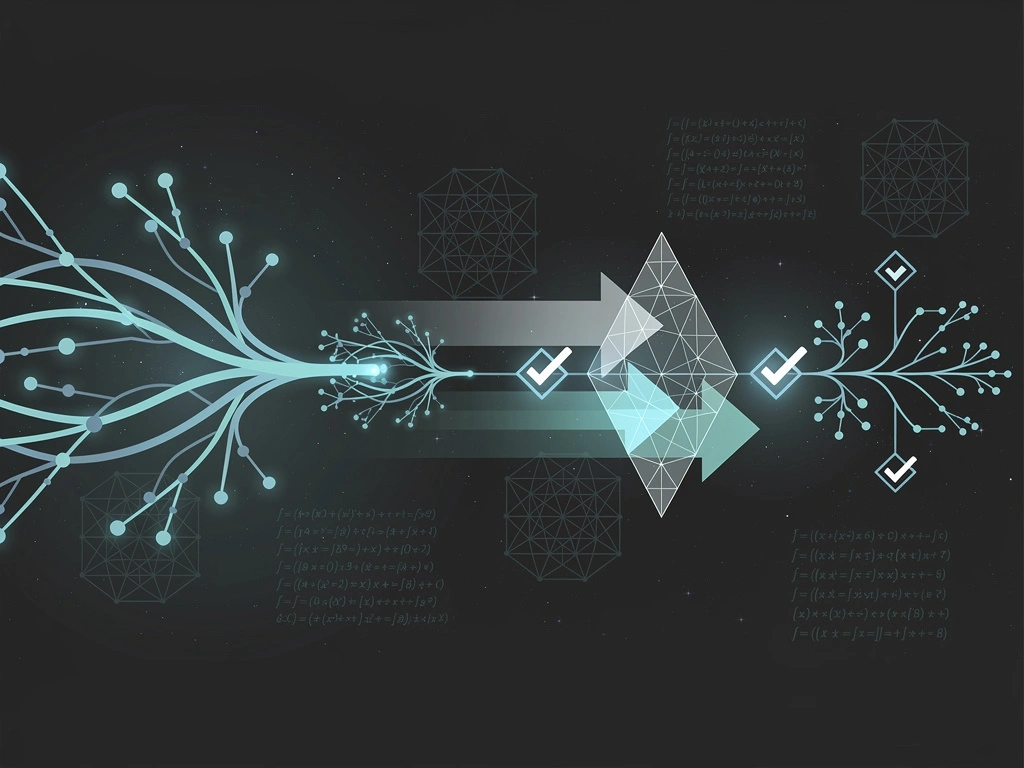
This is the mechanism Ora built, drawn as it was designed to run. Smart contracts called the Onchain AI Oracle through the IAIOracle Solidity interface and paid inference fees in ORA. Tora client nodes ran the model off-chain and posted results on-chain, which opML finalised unless challenged; on dispute a bisection game pinpointed the disagreement and the Fraud Proof VM settled the contested step. Node stakers bonded ORA as submitters or verifiers. The loop is no longer turning: the Ethereum oracle took its last request on 26 September 2025 and left it unanswered.
What it does
Ora Protocol was a verifiable oracle that brought AI inferenceInferenceRunning a trained AI model to produce an answer. Inference is what happens when you type a prompt into ChatGPT and get a response. The model takes your input, computes a best guess, and returns it.Like asking an expert for their opinion. The training was the decades they spent becoming an expert. The inference is the 30 seconds it takes them to answer your specific question.Inference in the glossary → on-chain. Smart contracts could call it for a model output and get back a result carrying a cryptographic guarantee that it had been computed honestly. That description is now historical.
Three things happened, and none of them was announced.
The oracle stopped serving. On Ethereum, the Onchain AI Oracle contract at 0x0A0f4321214BB6C7811dD8a71cF587bdaF03f0A0 counts every request it has ever received. That counter reached 4,615 on 26 September 2025 and has not moved since. The last request answered in ordinary time was number 4,610, on 29 April 2025.
The documentation was deleted. The site at docs.ora.io served content as recently as 22 April 2026 and now returns no DNS record at all. It took the tokenomics page, the node-operator guide and the whitepaper link with it. Search engines still index those pages, so anyone following a link from a paper or a tutorial lands on nothing.
The name was reused. Between 5 May and 7 June 2026, ora.io was repointed at an AI-managed prediction-market fund product. It kept the Ora branding and expanded the acronym to Optimized Return Agents.
This is a pivot, not a hijack
An apex domain that stops resolving while a new site appears on the www subdomain is the shape of a lapsed registration or a registrar takeover, so that was worth ruling out before anything else. That’s ruled out four ways:
- The domain never lapsed. WHOIS shows ora.io active at GoDaddy with registry expiry in May 2027, on the same Amazon Route 53 nameservers it has always used.
- The GitHub org is the same org. The ora-io organisation still holds the opml, OAO and awesome-ora repositories, with their history intact, and now describes itself as Optimized Return Agents.
- The npm publisher is the same account. The new agent SDK package is published by hyper-oracle, the account Ora used under its original HyperOracle name.
- The X account is the same account. The verified handle joined in January 2022 and carries the same follower base under the new bio.
So the team that built the oracle is the team running the funds. What did not survive the move is the token.
Value proposition
The oracle stopped answering
Ethereum's request counter reached 4,615 and stopped. Five requests from August and September 2025 were never answered.
Standards work survives
ERC-7641, ERC-7007 and ERC-6150 are authored into the public record and outlive the protocol that produced them.
The token was left behind
The successor product routes USDC on Polymarket and never mentions the ORA token, its contract or its tokenomics.
The engineering was worth taking seriously, which is why the ending matters. opML (optimistic machine learningMLMachine Learning. The branch of AI where systems learn patterns from data instead of being explicitly programmed with rules. Modern AI (LLMs, image generation, recommendation systems) is almost entirely machine learning.Like teaching a child to recognise dogs by showing them thousands of pictures of dogs, instead of writing down a precise rulebook for what makes a dog. The child learns the pattern from examples rather than from instructions.ML in the glossary →) ran inference off-chain and posted the result on-chain as correct unless challenged. A challenge triggered a bisection game that narrowed the disagreement to a single computational step, which a Fraud Proof Virtual Machine then settled on-chain. Because verification only ran on dispute, it cost far less than zkMLZKMLZero-Knowledge Machine Learning. A cryptographic technique that lets a prover convince a verifier that a specific model produced a specific output, without revealing the model weights or the input.A sealed-bid auction with a referee. You don't see the bids and you don't see the model that picked the winner, but the referee hands you a tiny receipt that proves the winner was selected by the agreed rules. ZKML is the maths that produces that receipt.ZKML in the glossary →, which proves every computation whether anyone doubts it or not.
The team also authored three Ethereum standards: ERC-7641 for revenue-sharing tokens, ERC-7007 for verifiable AI-generated content, and ERC-6150 for hierarchical NFTsNFTNon-Fungible Token. A unique blockchain-tracked asset where each token is distinguishable from every other. Where regular tokens are interchangeable, NFTs represent unique items like art, collectibles, in-game assets, or domain names.Like the difference between a $20 note and a signed first-edition novel. The notes are interchangeable, any $20 buys the same thing as any other. The book is one of a kind, and its value depends entirely on which specific book it is.NFT in the glossary →. Those are in the public record permanently. They are the part of this project that outlives it.
What the chain says about usage
Usage figures of more than 180,000 inference calls, over 500 nodes running the Tora client and 20-plus projects building on the oracle circulated around it, but we couldn’t trace them to any Ora page that still opens, so they can’t be re-checked. The contract can be read directly instead, and it tells a smaller story.
| Reading, Ethereum mainnet | Value |
|---|---|
| Lifetime requests received | 4,615 |
| Last request received | 26 September 2025 |
| Last request answered on time | 29 April 2025 |
| Requests never answered | 4,611 to 4,615 |
| Only result event since | 5 May 2026, settling request 4,606 |
Two details there carry most of the weight. The single result posted in May 2026 answered request 4,606, an older one, so it was a backfill rather than a return to service. And every request from April 2025 onwards came from 0x61423153f111BCFB28dd264aBA8d9b5C452228D2, which Ora’s own oracle repository names as its SimplePrompt example contract. In its final months the oracle’s only caller was Ora’s own demo.
Elsewhere the picture is the same. The last activity readable on Base was May 2025, on Arbitrum August 2025, and on Linea March 2025.
What replaced it
The replacement product listed AI-run funds that trade prediction markets, and it was small: six funds with a combined AUM in the low hundreds of dollars, and a headline Ora World Cup leaderboard showing no ranked entries. The team was shipping, with an agent SDK published in June 2026 that submits orders to Polymarket in USDC.
Then that went dark too. On 18 September 2026 ora.io answers NOERROR with no A record at all, on both Cloudflare and Google, so the domain is still registered and still delegated to the same Route 53 nameservers and serves nothing. The docs subdomain went first, the oracle stopped emitting a year ago, and now the product that took the name is unreachable as well.
The ORA token has no part in it. The site’s rendered page and its JavaScript bundles contain no occurrence of the token’s contract address, its ticker, its tokenomics, opML, the oracle, the model-offering programme or stakingStakingLocking up a cryptocurrency to help secure a blockchain network, usually in exchange for rewards. The locked tokens act as a security deposit that can be taken away if the staker misbehaves.Like putting down a large rental deposit for an apartment. You get the money back if you behave, you earn interest while it's locked, and the landlord takes it if you trash the place.Staking in the glossary →.
Tokenomics
The token contract is the strongest thing left, and it’s stronger than a fixed supply usually implies. Reading the deployed contract directly: there is no owner, no role admin, no minter and no pause, every corresponding call reverts, and both proxy storage slots read zero, so the logic cannot be replaced. The verified source carries no mint function beyond four constructor calls, closed by an assertion that total supply equals the cap. Supply can fall through burns and cannot rise. Contract address: 0x33333333FEde34409Fb7f67c6585047E1F653333.
Set against that, the disclosure record is poor and has now been made permanent. A single on-chain transfer of exactly 110,000,000 ORA on 16 December 2025 moved circulating supply from roughly 17% to roughly half, with no published schedule and no announcement. Holders could not have anticipated it, and cannot anticipate what remains. Around half of total supply still has no public allocation, and $23M was raised from institutional investors whose token terms were never disclosed.
On-chain concentration is heavy. The top ten Ethereum holders control 93.6% of supply raw, and 80.4% after excluding the bridge adapter as neutral infrastructure. Around 77% resolved to insiders when the funding trace last ran, once two team multisigs and a Safe-funded wallet were attributed. Ora described the launch as a Decentralized AI Community Offering modelled on Vitalik Buterin’s DAICO idea, which describes the initial float rather than the supply sitting behind it.
Every documented use for the token has now lapsed:
- Node staking concluded before the oracle stopped.
- Inference fees have no inference to price.
- Model-offering participation and agent creation ran on a site that no longer exists.
- Governance was listed as a core token utility in Ora’s own documentation and never had a venue to exercise it.
That last one deserves its own line. Ora’s ORA Coin page told holders they would shape the future of the protocol through decentralised governance. No Snapshot space was ever registered under any plausible identifier, and no on-chain governance contract was ever deployed. When the future of the protocol was actually decided, holders were not asked, and the page carrying the promise was taken down rather than honoured.
How to participate
There is no live participation route. Node operation ended with the inference network, building on the oracle means integrating with something that does not answer, and the agent-creation product went down with its website.
If you hold ORA, the practical position is a token with an immutable supply, a heavily concentrated holder base, thin decentralised liquidity and no product behind it. If you came here for the technology, the standards and the opML papers are still published and still worth reading.
Honest assessment
Freedom Score: 25/100
Infrastructure Decentralisation: 3/20. The network is not answering. The Ethereum request counter has been static since September 2025, five requests from that period were never served, and the closing traffic came from Ora’s own demo contract. The 500-node figure was self-reported and cannot be re-checked, because the node-operator guide lived on the deleted documentation domain.
Governance Decentralisation: 2/20. Governance was published as a core token utility and no venue was ever built. Querying the Snapshot hub for the plausible Ora identifiers returns nothing, and no on-chain governance contract is deployed. The decision to retire the product and reuse the name was taken without a holder vote, notice or wind-down statement.
Token Distribution Fairness: 5/15. The great majority of supply sits with insiders on-chain, as the tokenomics section sets out. The community framing described the initial float. Roughly half of supply entered circulation in one unannounced transfer, and the party that could have documented it has deleted its documentation.
Censorship Resistance: 7/15. Re-scoped to the token layer, which is the part still running, and it’s clean there. No owner, no roles, no pause, no blacklist and no upgrade path, so no balance can be frozen or seized. The AnyTrust argument that previously carried this dimension no longer applies, because there is no live inference to censor.
Data Sovereignty: 3/15. The verifiable-inference provenance that justified this score is no longer produced. The 4,615 historical requests remain permanently readable, which is worth something, and nothing new is being written.
Open Source Transparency: 5/15. The code and the standards hold up: 46 public repositories, an MIT-licensed opml repo, three authored ERCs, and a Salus Security audit of the staking contract dated 13 July 2024 reporting 2 high, 3 medium and 6 low findings with 11 of 13 resolved. The publication surface around them has collapsed. The documentation site is deleted, the blog has not posted since January 2025, the foundation subdomain no longer resolves, no audit ever covered the opML or oracle core, and the pivot was announced nowhere the project owns.
Returns Score: 16/100
Token Utility: 2/20. Staking concluded, inference fees have no inference, the model-offering and agent products went down with their website, and governance never had a venue. Axon liquidity mining is the one mechanism not shown to be dead, and its documentation has been deleted. The successor product does not mention the token anywhere.
Value Accrual: 1/20. There is no fee to accrue. The oracle’s model, callback and network fees needed inference that stopped. ERC-7641 revenue sharing applied to model-offering tokens rather than to ORA, and no buy-back or burnBurnPermanently removing tokens from circulation by sending them to an address that no one controls. Burns reduce total supply, which (all else equal) makes each remaining token worth more of the network's value.Like a company buying back its own shares and shredding them. The company's total value stays the same, but each remaining share now represents a slightly bigger slice of that value.Burn in the glossary → was ever implemented. Whatever the funds product earns, it earns in USDC and routes none of it here.
Supply Dynamics: 9/20. Held up almost entirely by the contract. No mint, no admin, no proxy, and a supply that can only fall. The deductions are for the undisclosed half and the unannounced December 2025 release, which are disclosure failures rather than code ones.
Revenue Sustainability: 1/25. The evidence that carried this dimension described a network that has stopped. The Ethereum lifetime counter stopped at 4,615, and the last traffic was self-generated. The successor funds are live at a combined AUM in the low hundreds of dollars.
LiquidityLiquidityHow easily a token can be bought or sold without moving the price. High liquidity means you can enter or exit large positions quickly at the quoted price. Low liquidity means even small trades can swing the market.Like the difference between selling a house and selling a share of Apple stock. The house might be worth more on paper, but finding a buyer at that price takes weeks. The Apple share converts to cash in one click.Liquidity in the glossary → & Access: 3/15. Four tickers on four decentralised venues, with Uniswap V3 on Ethereum carrying about 84% of the flow. No centralised venue quotes ORA. Median daily turnover sits close to zero, under a hundredth of a percent of market cap in early October 2026, and the token now has no product behind it to attract a listing.
Quadrant: D (Low Freedom, Low Returns)
Ora leaves Quadrant B and lands in D. The technical work was substantive and the standards contributions are permanent, but a protocol that has stopped serving cannot score on infrastructure, usage or data, and a token its own team has walked away from cannot score on utility or accrual.
Key risks
- The protocol is dormant. The oracle has taken no request since September 2025 and answered none since April 2025.
- Five requests were never answered. Contracts that called the oracle in August and September 2025 paid and are still waiting. Unanswered is worse than idle.
- The team has moved on without saying so. No blog post, documentation update or announcement covers the retirement of the oracle or the future of the token.
- The documentation is gone, permanently. Tokenomics, node guide and whitepaper links all dead-end, so nothing about the token’s design can now be checked against a live first-party source.
- About half of supply is undisclosed. No allocation, no vesting schedule, and a 110M release that arrived unannounced.
- The great majority of supply is insider-controlled on-chain, against thin decentralised-only liquidity.
- No audit covers the oracle core. The published Salus audit covers the staking contract only.
- The successor product is tiny. Six funds at a combined AUM in the low hundreds of dollars is not evidence of a team that traded up.
Score change log
| Date | Score | Change | Reason |
|---|---|---|---|
| 2026-10-07 | Data | N/A | Turnover restated from around a tenth of a percent to under a hundredth (7-day median 0.001%, early October). Scores unchanged. |
| 2026-09-24 | Data | N/A | Turnover wording moved from under a tenth of a percent to around a tenth, matching the 0.112% 7-day median of 23 Sep, and the ATH decline rounded to ~99.9%. Scores unchanged. |
| 2026-09-23 | Data | N/A | Integrity records re-cut: 4 claims now quote Ora’s own pages verbatim and 6 are our own measurements. Scores unchanged. |
| 2026-09-18 | Data | N/A | ora.io now serves no A record at all on two resolvers, so the prediction-market product that took the name is unreachable as well. Wired the DNS, Snapshot and oracle-liveness checks to weekly refreshers; scores unchanged. |
| 2026-09-08 | Both | Freedom 47 → 25 (F), Returns 43 → 16 (F) | The oracle is dormant and the project pivoted. Ethereum’s request counter stopped at 4,615 on 26 Sep 2025 with requests 4,611 to 4,615 unanswered, and the only later result backfilled an older request. Status set to dormant. |
| 2026-09-08 | Data | N/A | Pivot established rather than assumed. Lapse and takeover ruled out via WHOIS, the ora-io GitHub org, the hyper-oracle npm account and the X account; transition dated to 5 May to 7 Jun 2026 by capture digests. The successor product references the token nowhere. |
| 2026-09-08 | Data | N/A | Governance verdict restored to inflated after being withdrawn earlier the same day. The withdrawal generalised one uncaptured page to the whole host; the archived ORA Coin page carries the governance claim verbatim. Claim sources also recovered for supply and distribution. |
| 2026-09-06 | Data | N/A | Research JSON resynced to the frontmatter Returns breakdown. Supply Dynamics read 10 in the JSON after the 2026-09-05 move to 11 never propagated. No published score changed. |
| 2026-09-05 | Both | Supply Dynamics 10 → 11 (Returns 42 → 43), Token Distribution Fairness 7 → 6 (Freedom 48 → 47) | Resolves the 15 August deferral: the dilution overhang halved when circulating was corrected to ~50%, but the same 110M arrived with no published schedule, so disclosure reads worse. Both grades held at D. |
| 2026-08-16 | Data | N/A | Corrected “No audits found”: Salus Security audited the staking contract (13 July 2024), 2 high / 3 medium / 6 low, 11 of 13 resolved, though no published audit covers the opML core. Open Source Transparency 10/15 held pending monthly review. |
| 2026-08-15 | Data | N/A | Circulating supply corrected from 16.9% to 49.89% (~166.3M) and FDV/MCap from 5.9x to 2.0x, after an on-chain transfer of exactly 110,000,000 ORA on 16 Dec 2025 (Ethereum block 24025314). Supply Dynamics 10/20 and Token Distribution Fairness 7/15 held pending monthly review; weighing in docs/quarterly-review-backlog.md. |
| 2026-08-13 | Data | N/A | ORA has no citable published source for the distribution claim: docs.ora.io no longer resolves and ora.io has pivoted to an agent-funds product with /token, /tokenomics, /docs and /blog all 404. Recorded as unsourced rather than cited to third-party press. |
| 2026-08-10 | Data | N/A | WS3 holder-source + funding-trace: authored token_distribution_fairness (inflated, onchain), confirming the 7/15 score. Ethereum top-10 ex-infra 81.4% of supply, ~77% insider: two team/treasury Safes plus a 26.3% EOA the trace resolved to Safe-funded. The “community-first TGE” describes the float, not the concentrated supply. No score change. |
| 2026-06-26 | Data | N/A | DefiLlama LlamaAI harvest cross-check, verified independently (api.llama.fi + CoinGecko, coingeckoId ora-coin). Published figures held up: 16.9% circulating (~56.3M of 333.3M), sub-$1M market cap ($264K), $23M total funding. Corrected the FDV/MCap ratio (5.2x → 5.9x; 16.9% circulating mathematically implies 5.9x). Re-verified ATH decline at ~99.9% (CoinGecko -99.91% from $5.37, TGE day 19 Nov 2024). Two DefiLlama warehouse bugs noted but they do not touch our data: the broken coingecko:ora-protocol price map is a slug we do not use (ours, ora-coin, resolves), and the double-logged $20M Series A (summed to $43M under ora+ora-protocol) is already deduped to the correct $23M in our copy. No score change. |
| 2026-03-06 | Both | N/A | Initial publish. Freedom 48/100, Returns 42/100. |
Team overview
BS Information Science & Technology, University of Arizona. Former software engineer at Google (cryptography and AI) and TikTok. Started crypto ~2011.
Background in supercomputer architecture. Whitehat hacker. Authored ERC-7007 and ERC-7641 standards.
Limited public information available.
| Round | Amount | Date | Lead |
|---|---|---|---|
| pre-seed | $3.0M | 2023-01-01 | HongShan (ex-Sequoia China), dao5 |
| strategic | $20.0M | 2024-06-01 | Polychain Capital, HashKey Capital |
Source: OYM Research · Last updated 2026-10-19
Technical snapshot
Verifiable AI oracle using opML (optimistic machine learning) — off-chain ML computation with on-chain fraud-proof verification. Optimistic execution with interactive dispute game using bisection protocol. Fraud Proof VM for single-step on-chain verification. AnyTrust security (one honest validator sufficient). Core products: OAO (Onchain AI Oracle), IMO (Initial Model Offering via ERC-7641), RMS (Resilient Model Services), opAgent (on-chain perpetual agents), Pump.ai (permissionless agent creation).
Commit Activity
Audits
Scope: ORA staking contract only (v5, commit f4ddf14); no published audit covers the opML or OAO core
2 high, 3 medium, 6 low; 11 findings resolved, 1 mitigated, 1 acknowledged (see integrity published_audit)
View reportSource: OYM Research · Last updated 2026-10-19
Tokenomics deep dive
Token utility
- Node staking (validators and submitters)
- IMO participation
- Protocol governance
- Agent creation on Pump.ai (1 ORA minimum)
- OAO inference fees (Model Fee + Callback Fee + Network Fee)
Source: OYM Research · Last updated 2026-10-19
Participation at a glance
No live participation route remains. Node operation ended with the inference network, OAO integration has nothing answering, and Pump.ai agent creation ran on a site that no longer exists. Holding or selling the token on a decentralised venue is all that is left.
Source: OYM Research · Last updated 2026-10-19
Community
Source: OYM Research · Last updated 2026-10-19
Read next
Project review
Allora Network
Self-improving decentralised AI inference network using regret-based model aggregation on Cosmos SDK. Tier-1 exchange listings, $35M raised, zero verified revenue, massive unlock cliff November 2026.
Project review
Auki Review
Hong Kong spatial-computing DePIN with one externally documented retail pilot and an admitted-centralisation posemesh. Daily linear vesting is the cleanest piece. Reconstruction node network in closed beta. The 40,000-stores headline that surfaced in DeAI triage is wrong.
Project review
IoTeX
EVM-compatible L1 purpose-built for DePIN and real-world AI. Device identity (ioID), ZK-verified data (W3bstream), 7+ years mainnet. MiCA-compliant, CF Benchmarks listed. ~$2M TVL.